Bosnia and Herzegovina is home to a variety of architectural landmarks that showcase its rich history and cultural diversity. From Ottoman mosques to medieval fortresses, these iconic buildings reflect the country’s resilient spirit and historical significance. This guide presents 23 must-see structures, each with its unique story and importance, offering a glimpse into the nation’s past.
Legendary buildings in Bosnia and Herzegovina
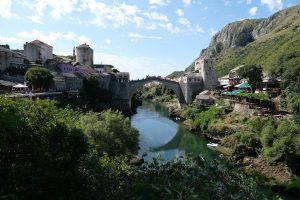
1. Stari Most (Old Bridge) – Mostar
Stari Most, or the Old Bridge in Mostar, is one of the most recognizable symbols of Bosnia and Herzegovina. Built in the 16th century during the reign of the Ottoman Empire, the bridge was designed by the celebrated architect Mimar Hayruddin. This single-arch stone bridge stretches across the Neretva River, connecting the two parts of the city of Mostar.
Its significance isn’t just architectural but deeply cultural, representing the harmonious coexistence of diverse ethnicities and religions that characterize the country’s history. It was destroyed during the Croat-Bosniak War in 1993 but was reconstructed and reopened in 2004.
Visitors often gather to watch the daring local divers leap from the bridge, a tradition that dates back generations.
2. Gazi Husrev-beg Mosque – Sarajevo
Commissioned by Gazi Husrev-beg, the governor of the Ottoman province of Bosnia from 1521 to 1541, this mosque stands as a centerpiece of Islamic architecture. The mosque is located in Baščaršija, Sarajevo’s old bazaar. It boasts an impressive dome and stunning minaret.
Notably, it was one of the first mosques in the world to receive electricity. It serves not only as a place of worship but as an educational and cultural center, hosting various exhibitions and lectures that promote understanding of Islamic traditions and heritage.
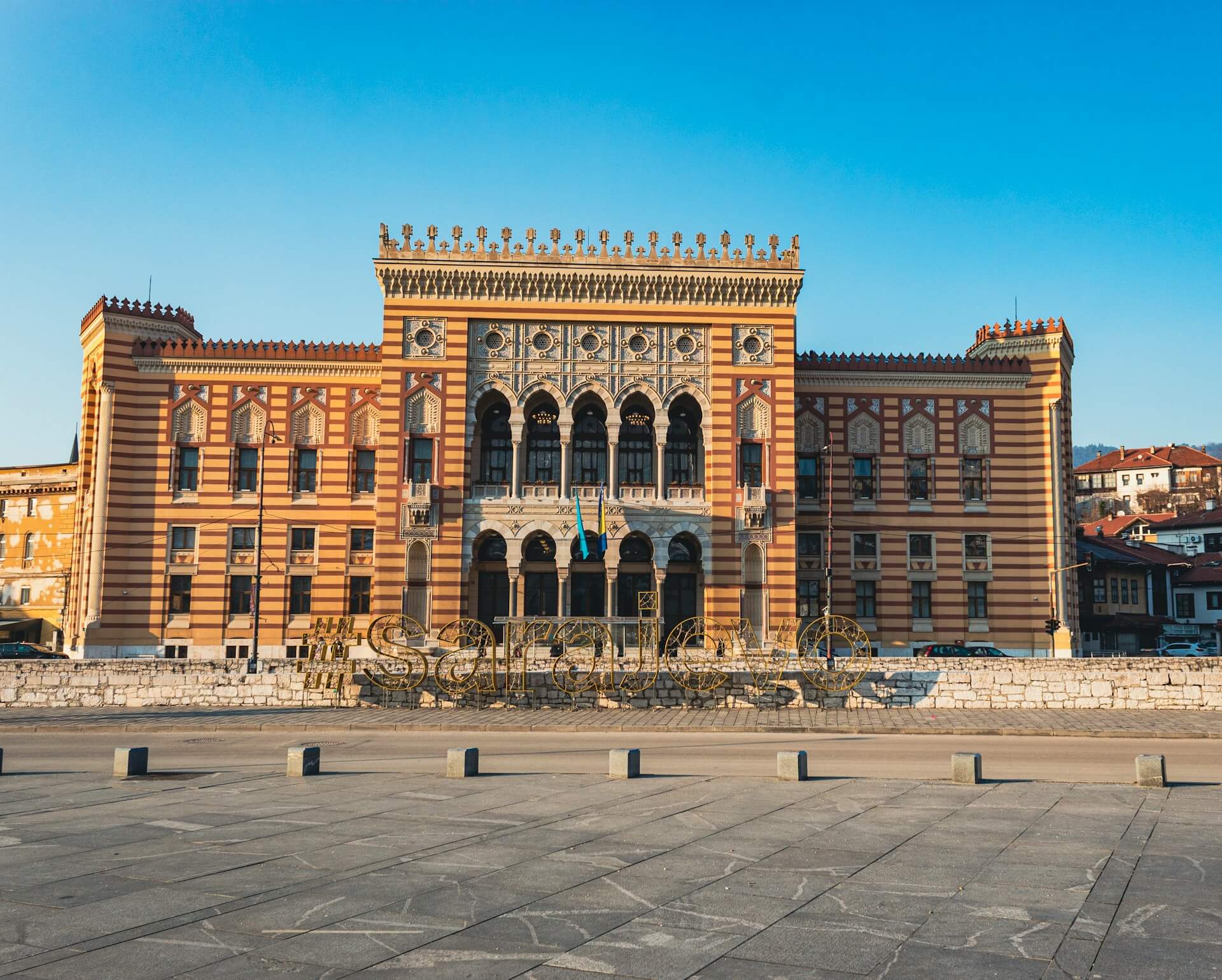
3. Vijećnica (Sarajevo City Hall) – Sarajevo
Sarajevo’s City Hall is a masterpiece from the Austro-Hungarian era. Its colorful façade and intricate ornamental detail reflect an eclectic blend of Eastern and Western influences. Tragically, Vijećnica was severely damaged in 1992 during the siege of Sarajevo, resulting in the destruction of countless historical documents housed in its library.
After extensive restoration efforts, it was reopened in 2014, and today it stands as a testament to the spirit of regeneration. Currently, it functions as a national and university library, as well as a venue for significant cultural events and exhibitions.
4. Mehmed Paša Sokolović Bridge – Višegrad
The Mehmed Paša Sokolović Bridge is the work of the famous architect Mimar Sinan, and one of the finest examples of Ottoman bridge architecture. Spanning the Drina River with its 11 arches, the bridge plays a significant role in Ivo Andrić’s acclaimed novel “The Bridge on the Drina,” which earned him the Nobel Prize in Literature. Declared a UNESCO World Heritage Site, this structure has witnessed numerous historical events and changes over centuries, symbolizing the region’s turbulent history and diversity.
5. Tvrdoš Monastery – Near Trebinje
This Serbian Orthodox monastery near the Trebišnjica River was founded in the 15th century and has been a crucial religious center ever since. The monastery represents a vivid cultural and spiritual legacy of the Eastern Orthodox Church thanks to its valuable frescoes from the 16th and 17th centuries.
Although it’s been rebuilt multiple times due to conflicts and natural disasters, Tvrdoš Monastery has maintained its religious significance. Moreover, it continues its tradition in viticulture, producing renowned wines that attract both connoisseurs and tourists.
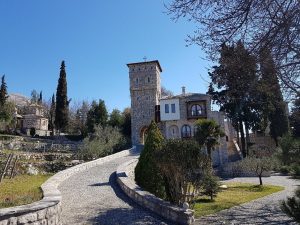
6. Bihać Captain’s Tower – Bihać
The Captain’s Tower in Bihać is a historic fortification located in the northwestern part of Bosnia and Herzegovina. This medieval tower is one of the few remaining pieces of the town’s ancient defensive structures, dating back to the 13th century. The tower initially served as a strategic point of defense against various invasions over the centuries.
The Captain’s Tower is renowned for its robust stone construction and remarkable endurance through numerous conflicts and harsh weather conditions. Over the years, it has been repurposed and preserved as a museum. Visitors can explore exhibits that chronicle the region’s rich history, including displays of medieval weaponry, traditional costumes, and documentation of Bihać’s architectural evolution.
7. Kastel Fortress – Banja Luka
Sitting on the banks of the Vrbas River, the Kastel Fortress is one of the oldest structures in Banja Luka. The site’s history goes back to Roman times but gained its current form during the Ottoman occupation. Today it’s a poignant reminder of the city’s layered history. It is currently used as a venue for cultural events, concerts and festivals, making it a vibrant, living part of the city’s community.
8. Koski Mehmed Pasha Mosque – Mostar
To those visiting Mostar, the Koski Mehmed Pasha Mosque, built in 1618, presents a unique opportunity to explore Ottoman religious architecture and enjoy panoramic views of the city from its elevated minaret. The community celebrates this mosque for the well-preserved interior frescoes, intricate calligraphy and its compact yet impressive court that enhances the spiritual ambiance of the site.
9. Zemaljski Muzej (National Museum of Bosnia and Herzegovina) – Sarajevo
As Bosnia and Herzegovina’s oldest cultural and scientific institution, the National Museum hosts an extensive collection showcasing the natural, cultural and historical heritage of the region. Among its treasures is the Sarajevo Haggadah, a Jewish manuscript from the 14th century. This is a rare artifact that survived periods of conflict and is emblematic of the region’s multicultural history.
10. Ferhadija Mosque – Banja Luka
The Ferhadija Mosque, constructed in 1579, is one of the finest examples of Ottoman Islamic architecture in Europe and a vital cultural and historical symbol in Banja Luka. Despite being destroyed during the Bosnian War in the 1990s, it was rebuilt with great precision and reopened in 2016. The mosque’s revival not only restored a piece of architectural history but also symbolized efforts towards cultural reconciliation and healing post-war divisions.
11. Blagaj Tekke – Blagaj
Standing at the base of a cliff next to the cold source of the River Buna, Blagaj Tekke is a serene and beautiful Dervish monastery dating back to the Ottoman period. This iconic building even has some legends surrounding it.
The picturesque location and stunning architecture make it one of the most visited tourist spots in Bosnia and Herzegovina, offering insight into the spiritual traditions of the Dervish order and the history of the area.
12. Cathedral of Jesus’ Heart – Sarajevo
The Cathedral of Jesus’ Heart (Katedrala Srca Isusova) in Sarajevo, commonly known as the Sarajevo Cathedral, is a prominent architectural and religious landmark in the capital city. This Roman Catholic cathedral is a prime example of the neo-Gothic architectural style infused with neo-Romanesque elements. It was designed by architect Josip Vancaš.
It serves as the largest cathedral in Bosnia and Herzegovina and the center of Catholic worship in the region. The façade of the cathedral showcases pointed arches, a central rose window and twin bell towers.
Throughout its history, the Sarajevo Cathedral has endured significant challenges, especially during the Siege of Sarajevo in the 1990s when it suffered damage.
Nevertheless, it has undergone restoration efforts and continues to stand as a vital symbol of faith and resilience The cathedral is also a centerpiece in many public ceremonies and events, playing an integral role in the cultural and religious life of the city.
13. Sevdah Art House – Sarajevo
The Sevdah Art House is a cultural institution dedicated to preserving and promoting the traditional Bosnian music genre known as “sevdalinka” or “sevdah.” The building itself is a beautifully restored Ottoman-era house that combines architectural elegance with cultural enrichment.
It provides a unique and immersive experience for visitors interested in understanding the depth of Bosnian musical heritage. Inside, the museum showcases exhibits that explore the history and evolution of sevdah music, including traditional musical instruments, historical recordings and stories of legendary sevdah performers.
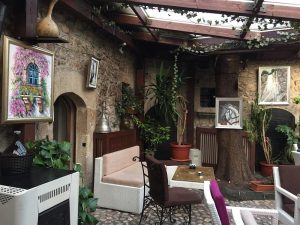
14. St. James Church – Međugorje
Though relatively modern compared to other entries on this list, St. James Church has become an epicenter of global Catholic pilgrimage due to the reported Marian apparitions in Međugorje beginning in 1981. The church, with its twin towers and vast pilgrim space, serves as a focal point for millions seeking spiritual inspiration and communal worship annually.
15. Šerefudin’s White Mosque – Visoko
This is a remarkable example of modern Islamic architecture born in traditional style, completed in the late 20th century. Architect Zlatko Ugljen designed the mosque with a unique twisting minaret and modernistic approach, creating a dynamic dialogue between historic Islamic themes and contemporary aesthetics.
This innovative design illustrates the evolution of cultural expression within Bosnia and Herzegovina’s architectural narrative.
16. Vranduk Fortress – Near Zenica
Vranduk Fortress stands as a guardian of history over the Bosna River basin. Built in the medieval period by the Bosnian Kingdom, its massive stone structure provides fascinating insights into the defensive strategies and architectural prowess of the time. It is often used as a venue for historical reenactments and medieval fairs, immersing visitors in the folklore and traditions of the past.
17. Stolac Fortress – Stolac
This is one of the most legendary fortresses in Bosnia and Herzegovina, boasting formidable defensive walls and breathtaking views of the surrounding area. The fortress played a vital role throughout numerous historical conflicts. Today, it stands as a testament to the resilience and strategic significance of the town of Stolac since ancient times.
18. Clock Tower (Sahat Kula) – Sarajevo
The historic Clock Tower in Sarajevo is distinguished by its unique timekeeping – showcasing the lunar time as used by Muslims for prayer times. Therefore, it strikes significant cultural chords with Sarajevo’s Muslim community. Built in the 16th century by the Ottomans, its architectural design is a prominent feature within the heart of Old Sarajevo, resonating with the rhythm of local life over centuries.
19. Emperor’s Mosque – Sarajevo
The Emperor’s Mosque, ordered by Sultan Mehmed the Conqueror and erected in 1457, is one of the city’s oldest mosques and symbolizes the early phase of Islamic architecture in Bosnia. It uses a straightforward architectural language while highlighting elaborate ornamental features typical of Ottoman design, and it functions continuously as a place of worship and community engagement.
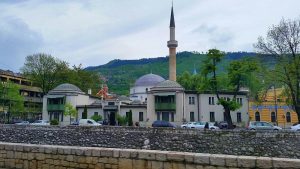
20. The Srebrenik Fortress – Srebrenik
The Srebrenik Fortress is a stunning medieval fortification that dates back to the 13th century. Set on a hill overlooking the town, this well-preserved fortress is an iconic representation of Bosnia and Herzegovina’s medieval history.
The fortress features robust stone walls and defensive towers, constructed to protect the town and its inhabitants from invaders. The structure reflects a blend of different architectural influences.
Visitors to the Fortress can explore its remnants of living quarters, storage areas and towers. The site also offers panoramic views of the picturesque countryside, which adds to its allure as a tourist destination. In recent years, efforts have been made to restore and maintain the fortress, ensuring its status as a significant cultural heritage site.
21. Kraljeva Sutjeska Monastery – Kraljeva Sutjeska
Kraljeva Sutjeska Monastery near the town of Kakanj is a powerful symbol of Christian resilience amid centuries of change. It features Gothic architectural elements and treasures an extensive collection of religious artifacts, manuscripts, and artwork. It was historically vital for the spread of the Franciscan order and remains an active center for religious contemplation and education.
22. Sarajevo Assassination Site – Latin Bridge
The Latin Bridge gained historical notoriety as the site of the 1914 assassination of Archduke Franz Ferdinand, an event that precipitated World War I. This humble stone bridge spans the Miljacka River and now serves as a poignant reminder of Sarajevo’s role in world history. Visitors often reflect on its impact while learning about the political ramifications that stemmed from that fateful day.
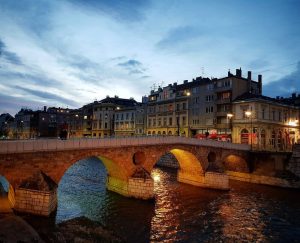
23. Hutovo Fortress – Neum
While there may be other, better-known buildings, we also want to highlight one in Neum, the town known for being one of Bosnia’s few connections to the Adriatic Sea.
Hutovo Fortress in Neum is a historic structure originally built for defense. It forms an irregular pentagon and boasts a total of 9 towers.
Despite its weathered state, Hutovo Fortress remains a popular attraction for both history enthusiasts and nature lovers. Visitors can explore the remnants of its walls and enjoy the stunning scenery.
Conclusion
These 23 iconic buildings in Bosnia and Herzegovina represent the country’s rich history and cultural heritage. Each site tells a unique story and highlights the nation’s diversity. Whether you are interested in history or architecture, visiting these landmarks provides valuable insights into Bosnia and Herzegovina’s vibrant past. Which one would you be excited to visit first?
If you need help planning your trip to Bosnia and Herzegovina, we’re here to help. We’ll create an itinerary that fits your budget and interests, and a bunch of unforgettable memories!