Are you a huge history buff? Bosnia and Herzegovina may be the perfect spot for your next trip then. This country has a melting pot of various civilizations, including the Roman, Ottoman and Austro-Hungarian Empires. You’ll find an abundance of historical treasures that tell stories of resilience, conflict and unity.
Interested? Read about 21 must-see historical spots that offer a fascinating journey through Bosnia and Herzegovina’s tumultuous yet vibrant past.
Iconic historical places in Bosnia & Herzegovina
1. Stari Most, Mostar
This list would certainly be incomplete if we didn’t mention The Stari Most, or Old Bridge, in the city of Mostar.
This bridge is one of the country’s most renowned landmarks. It was originally constructed in 1566 by the Ottomans and symbolizes the connection between diverse cultures and peoples.
After being destroyed in the war in 1993, it was meticulously rebuilt and reopened in 2004, using original techniques and materials. Its reconstruction has been symbolic of reconciliation and resilience, and the bridge has become a UNESCO World Heritage site.
Aside from the bridge, the surrounding area offers charming cobblestone streets and artisanal shops. Moreover, you can visit the Koski Mehmed Pasha Mosque, which offers spectacular views of the bridge and Neretva River.
2. Sarajevo Tunnel, Sarajevo
The Sarajevo Tunnel, also known as the Tunnel of Hope, is a remarkable monument of human ingenuity and courage.
It was built 1993 during the Siege of Sarajevo and was the only lifeline to the outside world for the besieged citizens. Specifically, this 800-meter-long underground passage was used to transport food, medical supplies and weapons-
In addition, it was used to evacuate the injured and facilitate communications beyond hostile lines. A visit to the tunnel museum offers insight into the harrowing four-year siege, sharing personal stories and displaying artifacts from the period.
Besides, the museum also includes photographs and video footage that showcase the resilience and solidarity of Sarajevo’s people during this dark time in history.
3. Gazi Husrev-beg Mosque, Sarajevo
The Gazi Husrev-beg Mosque, built in 1531, remains one of the most important Islamic structures in Bosnia and Herzegovina.
Its elegant design reflects the skillful architecture of the Ottoman era, featuring a large central dome and a graceful minaret. Moreover, the mosque has been a center for learning and community since its establishment by notable Ottoman governor Gazi Husrev-beg.
Today, it continues to function as a religious and cultural landmark. Visitors can admire its rich interior, including intricate calligraphy, decorative tiles and finely crafted wooden elements. The mosque complex also includes a library, a madrasa and a clock tower.
4. Mehmed Paša Sokolović Bridge, Višegrad
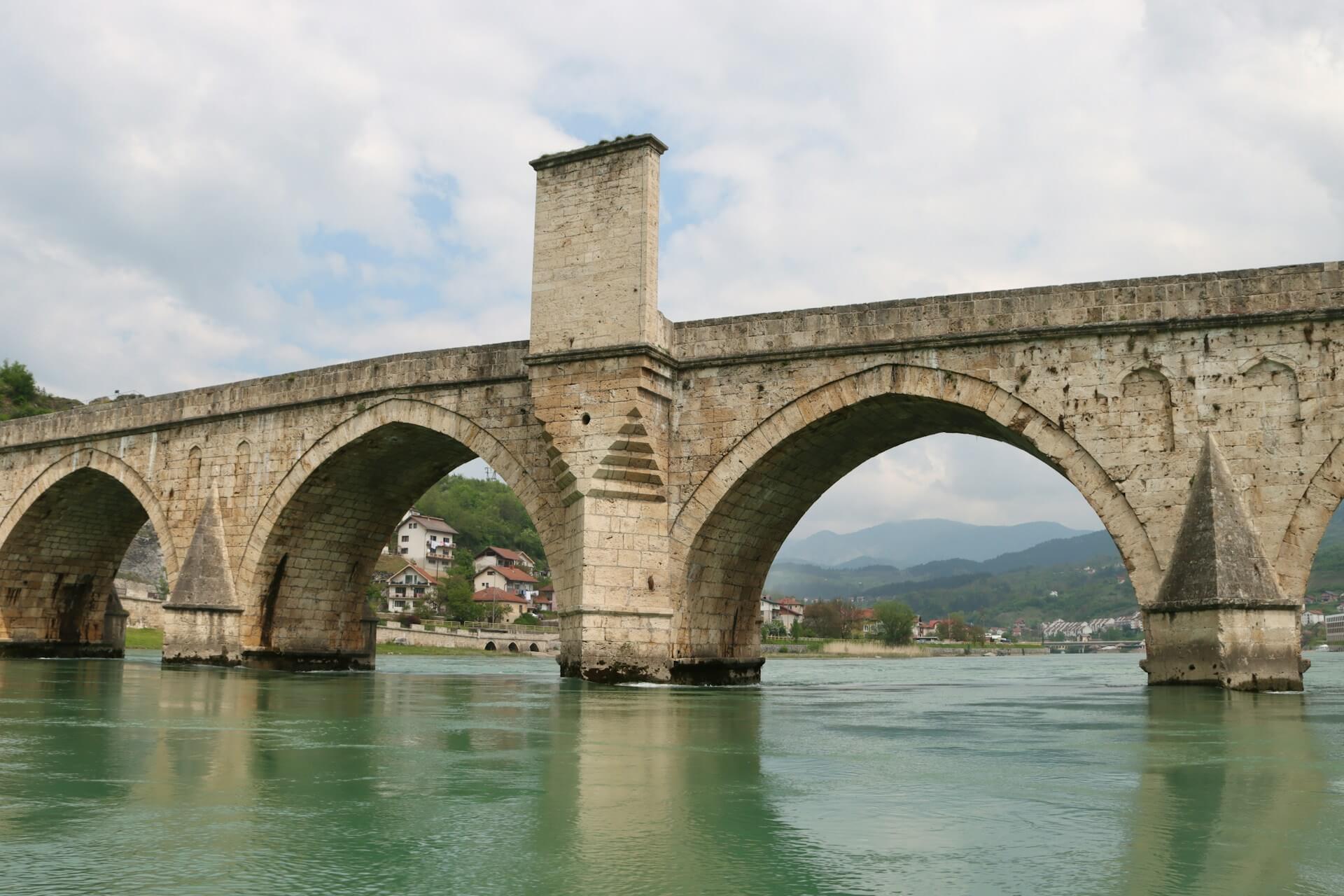
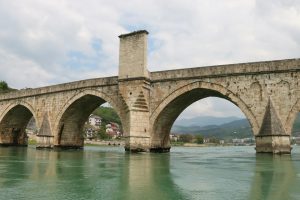
Spanning the Drina River in Višegrad, the Mehmed Paša Sokolović Bridge is a masterpiece of Ottoman civil architecture. It was designed by the eminent architect Mimar Sinan in the 16th century. The bridge features 11 impressive arches stretching 180 meters across the river.
The bridge is not only a vital historical monument but also a focal point of literary significance as it was immortalized by Nobel Prize-winning author Ivo Andrić in his novel “The Bridge on the Drina.”
Touring this UNESCO World Heritage site, you can reflect on the multicultural interaction and the region’s historical socio-political ties.
5. Monument to the Revolution, Kozara National Park
The Monument to the Revolution is a significant historical site commemorating the battles fought during World War II between the Partisan forces and Nazi troops. This monument is located within Kozara National Park and part of a memorial complex. The complex features various monuments and a museum that recounts the experiences of soldiers and civilians during this pivotal conflict.
The memorial serves as a poignant reminder of the struggles faced during wartime and the importance of remembering those who sacrificed their lives for freedom.
Finally, the park itself is famous for its stunning natural beauty, featuring lush forests and hills.
6. Blagaj Tekke, Blagaj
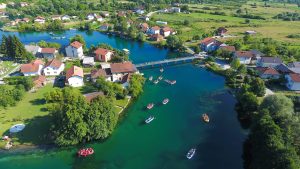
The Blagaj Tekke is a Dervish monastery at the base of a towering cliff in Blagaj where the Buna River emerges from a spring. This 16th-century site serves as a peaceful retreat and a spiritual center for Sufi followers.
Additionally, the tekke features Ottoman and Mediterranean architectural influences, offering visitors a serene atmosphere and stunning natural surroundings. You can enjoy a traditional Bosnian coffee or meal at riverside cafes, reflecting on the mystical ambiance and the historical significance of this spiritual hub.
7. Tvrđava Kastel, Banja Luka
The Tvrđava Kastel (Kastel Fortress) in Banja Luka is an impressive fortress with layers of history dating back to Roman times. Over centuries, it was fortified by Slavs, Ottomans and Austro-Hungarians, each leaving their mark on its architecture.
Today, Kastel serves as a venue for cultural events and music festivals, bringing life to its ancient walls. You can explore its towers and battlements to discover stories of defense and conquest, while taking in vistas of the Vrbas River and the modern cityscape beyond.
8. Vjetrenica Cave, Zavala
Vjetrenica, meaning “wind cave,” is the largest and most important cave system in Bosnia and Herzegovina. This natural wonder is situated near the village of Zavala and stretches over 7 kilometers underground. The cave features magnificent stalactite and stalagmite formations and is home to unique species. One of them is the proteus, or “human fish,” a rare and blind amphibian.
Additionally, archeological evidence suggests human activity dating back to the Paleolithic era, including cave paintings of an extinct species of leech. Guided tours provide insight into both the geological history and the ecological importance of this subterranean treasure.
9. Srebrenica-Potočari Memorial Center, Srebrenica
The Srebrenica-Potočari Memorial Center serves as a poignant reminder of the tragic events that occurred during the Bosnian War, particularly the 1995 genocide. This site honors the memory of over 8,000 Bosniak men and boys who were killed.
The memorial includes a cemetery with thousands of white gravestones and a wall engraved with the names of the victims. Moreover, an adjoining museum offers exhibits that educate about the broader context of the conflict and the ongoing efforts for justice and reconciliation.
10. Trebinje Old Town, Trebinje
Trebinje’s old town is a well-preserved testament to its Ottoman heritage, with cobbled streets, historic mosques and traditional Mediterranean architecture. It sits along the Trebišnjica River, radiating a relaxed atmosphere that invites visitors to explore its bustling markets and charming cafes.
Notable sites include the 18th-century Arslanagić Bridge and the Osman Pasha Mosque. Additionally, Trebinje’s proximity to the Adriatic coast means it benefits from a mild climate. So if you’re wondering when you should visit it, don’t worry – it’s an attractive destination year-round.
11. Bijela Tabija, Sarajevo
Bijela Tabija, or the White Fortress, is an iconic fort overlooking Sarajevo from the city’s eastern hills. This fortified stronghold was initially constructed in the 14th century and expanded during Ottoman rule to bolster the defenses of Sarajevo.
A visit to Bijela Tabija offers a glimpse into the strategic military planning of the past, as well as breathtaking panoramic views of the city and surrounding valleys. It’s a popular spot for both tourists and locals. If you’re looking to take in scenic vistas and get insight into Sarajevo’s layered history, then it’s ideal for you as well.
12. Perućica Rainforest, Sutjeska National Park
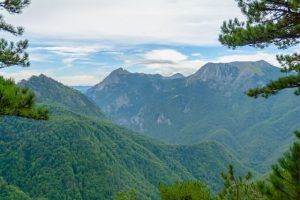
One of Europe’s last remaining primeval forests, Perućica is a natural gem in the heart of Sutjeska National Park. It spans over 1,400 hectares and is home to diverse flora and fauna, including species like the Balkan lynx and peregrine falcon.
Hiking trails through the forest lead to stunning viewpoints of the Skakavac Waterfall, one of the tallest in the country at 75 meters. The forest’s ecological value and pristine condition make it a significant site for both conservationists and nature enthusiasts.
13. National Museum of Bosnia and Herzegovina, Sarajevo
As the oldest cultural and scientific institution in the country, the National Museum of Bosnia and Herzegovina in Sarajevo houses extensive collections spanning archaeology, ethnology, natural history and art.
Among its most treasured possessions is the Sarajevo Haggadah, a beautifully illuminated Jewish manuscript from the 14th century. The museum’s abundance of exhibits provides a comprehensive overview of the region’s diverse cultural heritage, offering insights into the various communities and civilizations that have shaped the country over millennia.
14. Travnik Castle, Travnik
The town-fortress complex in Travnik is a stunning piece of medieval architecture. It narrates the city’s status as a former Ottoman provincial capital, despite being constructed much earlier than the arrival of the Ottoman Turks.
The Travnik Castle sits on a hill overlooking the town, providing expansive views and a tangible link to Bosnia’s defensive past. Within the fort’s walls, you will find a small museum displaying artifacts from various eras and exhibits about its strategic military significance.
15. Stolac Old Town, Stolac
Stolac may be a small town, but it’s an extremely intriguing one. It’s practically a living museum, showcasing remnants from the Illyrian, Roman and medieval periods all within a small radius. It offers a glimpse into Bosnia’s eclectic cultural past, with historic mosques, Orthodox and Catholic churches and ancient fortifications.
The most impressive historic site in Stolac is the old town of Vidoški. This is a medieval fortified city on a hill above Stolac, which used to have 13 towers to defend the town from possible attacks. Moreover, residential, military, religious and other objects were located within the walls of Vidoški.
16. Kraljeva Sutjeska Franciscan Monastery, Kraljeva Sutjeska
This Franciscan monastery in the village of Kraljeva Sutjeska near Kakanj holds profound historical and religious importance. It’s been a spiritual center since the 14th century, featuring a collection of rare books, art and artifacts that showcase the continuity of Franciscan traditions in Bosnia and Herzegovina.
The monastery’s architecture reflects various periods of reconstruction, echoing the resilience of the Catholic community in a region often marked by conflict.
17. Radimlja Necropolis, Stolac
We’re not quite done with Stolac on this list yet! Aside from the incredible medieval town of Vidoški, Stolac is also known for another historically significant site. Namely, we’re talking about the legendary stećak necropolis Radmilja.
These characteristic tombstones, inscribed with various motifs and epitaphs, date from the 12th to the 16th centuries. Their carvings reflect aspects of daily life, beliefs and the artistry of the medieval Bosnian population. The necropolis offers an interesting window into the country’s enigmatic medieval period.
18. The Jajce Catacombs, Jajce
This unique historical site features an underground church and catacombs carved from solid rock. Visiting here will give you a truly intriguing glimpse into early Christian worship practices. The catacombs date back to the 14th century and are thought to have been used as a secret place of worship by Franciscan monks.
Today, they stand as a hidden gem within Jajce, inviting visitors to explore their cool, shadowy passages.
19. Bobovac, Vareš
Bobovac is perhaps less famous, but still a significant archaeological site rich with history nonetheless. In fact, its importance is so vast that it is often called The Royal Town of Bobovac.
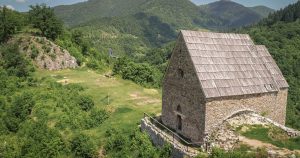
Sitting amidst mountains, Bobovac served as a fortified city from the 14th to the 15th centuries. Moreover, it wasn’t just an administrative and military center, but also the place where the royal crown was kept.
Among the ruins, visitors can see a chapel and royal graves, discovering a vital chapter of Bosnia’s regal past.
20. Stara Ćuprija, Konjic
Among the many ‘old bridges’ in Bosnia and Herzegovina, the Old Bridge in Konjic stands out as one of the most significant landmarks. The Stara Ćurpija was completed in 1682 during Ottoman rule and is notable for its classic design. It serves as an enduring symbol of the town’s historical narrative.
The bridge collapsed during World War II, but was faithfully reconstructed in 2009 and remains a testament to the area’s Ottoman heritage. Aside from the historical importance, it offers scenic views and connects the vibrant market area with residential neighborhoods.
21. Walled town of Počitelj, Počitelj
Počitelj is yet another walled town from the medieval times, which features stone houses, a mosque and a clock tower. The most iconic spot here is the Počitelj Citadel overlooking the town and the Neretva River. In fact, the Citadel was built by none other than the legendary King Tvrtko I of Bosnia.
This site showcases exquisite Ottoman and Mediterranean architecture, featuring stone houses, a mosque and a clock tower. The town’s historical significance, combined with its stunning views and artistic charm, makes it a captivating stop for travelers interested in the fusion of cultures throughout history.
Conclusion
From ancient fortresses and bridges to spiritually significant monasteries and poignant war memorials, each site in Bosnia and Herzegovina tells a story. Which one are you visiting first? Are you delving into wartime tales, exploring Ottoman legacies or discovering medieval mysteries?
If you need help crafting the perfect itinerary for your visit, reach out! We’re here to organize an exciting and memorable trip that fits your budget and interests.